Content Marketing Ideas That Actually Work in 2025 (And Why Most Brands Get It Wrong)
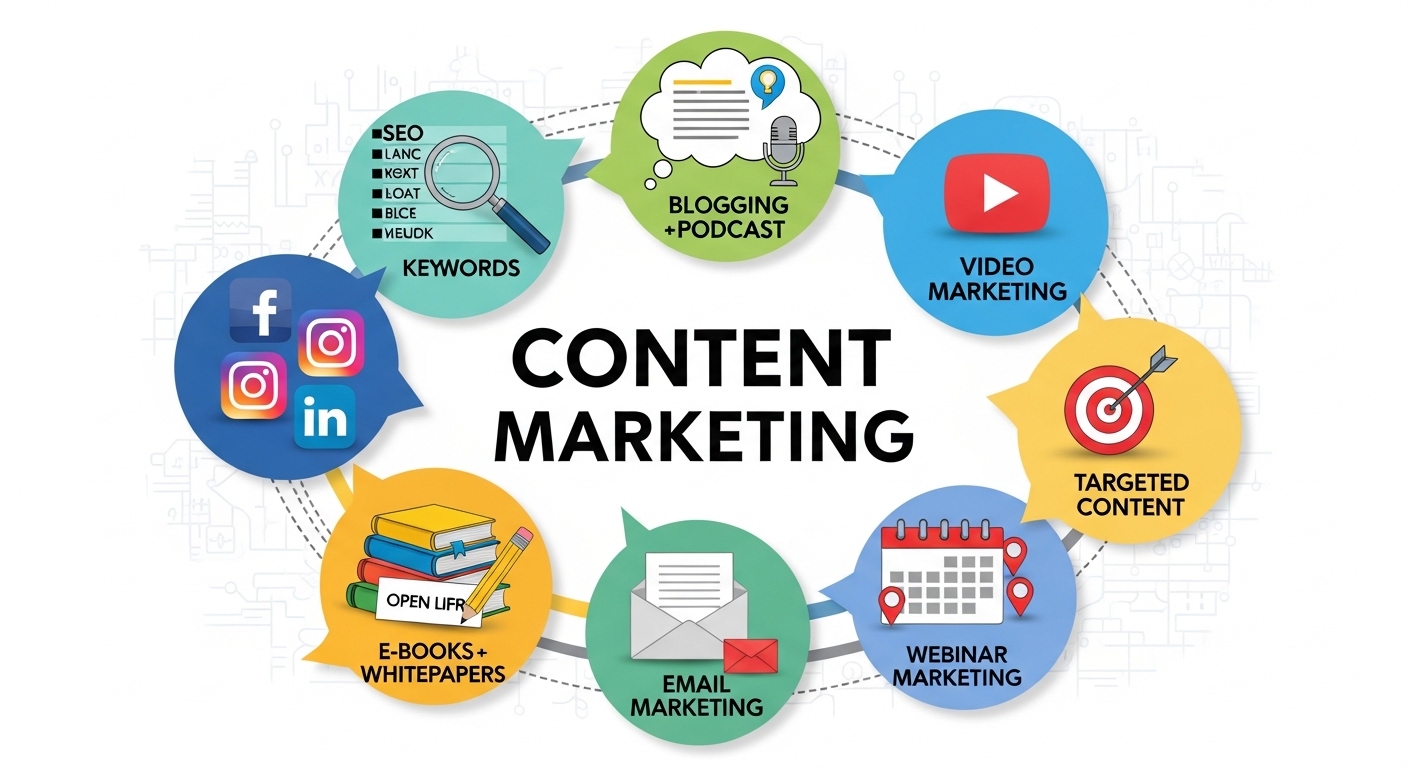
Content Marketing Ideas, Being frank with you, the vast majority of the people, when discussing content marketing, are still operating in 2018 mode. Keyboard-laden blog posts, social media posts which appear like copy-pasted posts, and email newsletters which no one requested. I have witnessed companies throwing down some hard-earned cash in content plans that result in nothing but bots and tumble weed in the comment box.
Begin With Audience Issues, Not Product Characteristics.

The majority of brands begin with content creation by posing the question: What do we want to say? The more pertinent question is, what does our audience dream about when lying awake in bed at night? Those are quite disparate beginnings, and they give rise to quite disparate content.
One of the SaaS companies that I had to collaborate with was publishing product update blogs and feature walkthroughs weekly. Traffic was flat. Engagement was dead. Four months after they started to write about workflow issues their users actually experienced, such as how to maintain accountability of remote teams or how to avoid project scope creep, their organic traffic doubled. Not that they discovered some magic key word. Since they had a genuine need.
Practical concept: Go down the Reddit threads, support desks, and review websites such as G2 or Trustpilot. The words that human beings express their frustrations with are gold. Write that very language in your text and you will be related at once.
It Has Gone Table Stakes Short-Form Video, But Wins the Depth.
Yes, you require short video. Tik Tok, Instagram Reels, YouTube Shorts, etc. these are the ones that cannot be compromised in order to be visible in 2025. The pitfall is as follows, though: most brands make short videos and believe that the job is done.
The short-form distribution is being paired by the brands with the true authority with long-form depth. A 60-second video will trigger curiosity; a written guide with details, a podcast episode or a webinar will fulfill it. Consider short video as the trailer and more substantial content as the movie.
This is brilliantly done by one such food brand I follow. Their Reels feature fast hacks on recipes that halt the scroll, though the caption will always refer to their site where you can get the detailed breakdown, the nutritional science behind the dish, the cultural story behind the dish. That complete story is indexed in Google, gathers email subscribers and is linked to food magazines. The Reel would be nothing of more than a momentary impression.
Create Content Pillar Strategy (Not Just a Blog Calendar)
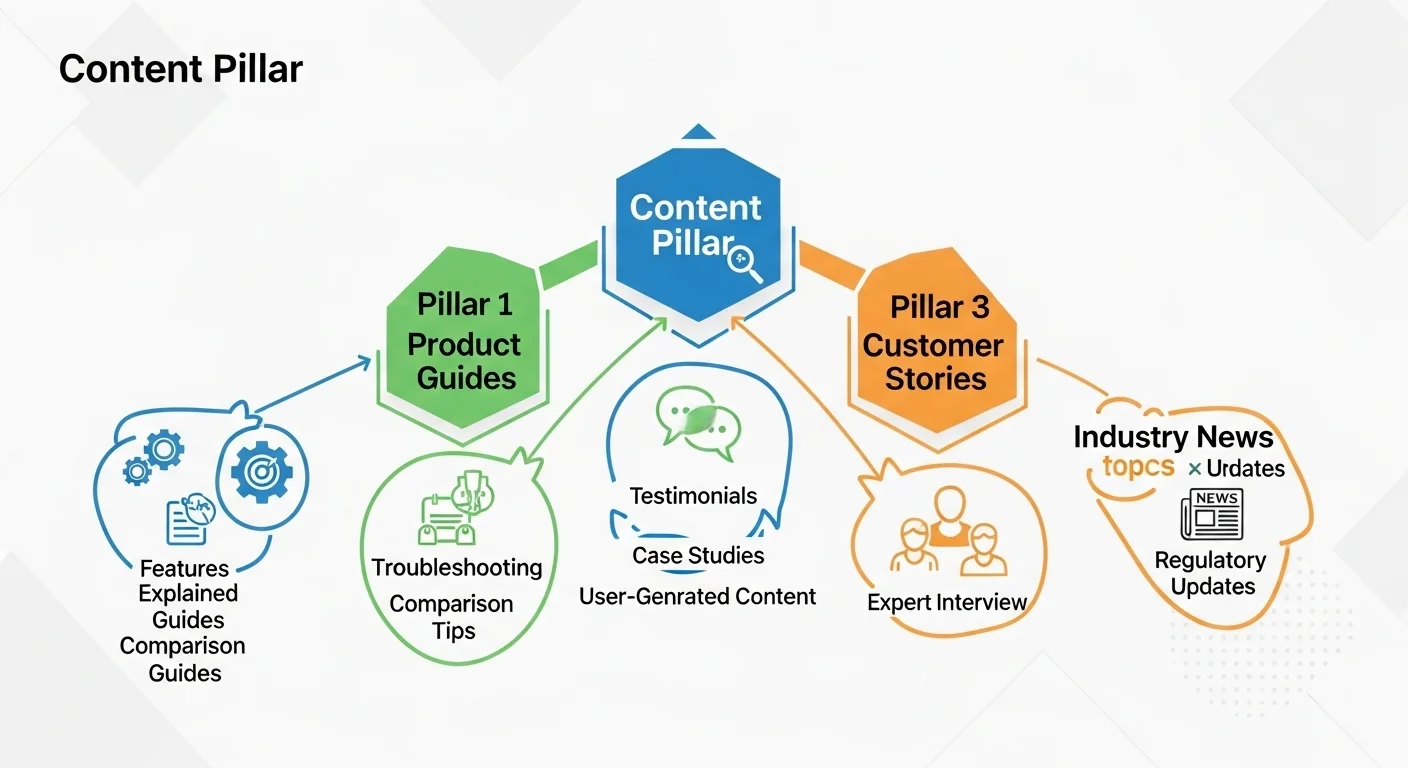
A content pillar approach implies that you would select three to five key areas that your brand has expert knowledge on and create content that connects around these pillars on a regular basis. A single, long-form pillar page, backed by groups of related articles, videos, social posts, email sequences – all of which refer back to that central topic authority.
As an example, a personal finance platform may have the following pillars: beginner budgeting, the psychology of investments, debt management, and freelancer finances. All content nourishes one or another of those pillars. With time, both the search engines and the viewers begin identifying your brand name with those given topics. Such association is priceless compared to a paid advertisement.
Original Research Earns Links, Shares and Trust.
Carry out a basic survey of your current clientele or email list 200-500 responses will be sufficient to make a significant dataset. Summarize the results into a report/infographic. Write about the background of the data. Publish it.
First hand information is nectar to journalists, bloggers and industry publications. They have to give references, and when you have made figures that no other person has, they will refer to you. A single original research article done well will earn more backlinks than a 12 months of generic blog posts.
An HR software company released an annual survey on the State of Remote Work, which included an approximate of 400 responses of mid-sized businesses. That one report garnered attention in trade magazines and dozens of blog mentions in 18 months. It took them perhaps 40 hours of in-house activity.
Newsletters through e-mail are experiencing a resurgence.

Intelligent content marketers are spending a lot of money on email newsletters that are personal and editorial, and not promotional blasts. Consider it as writing to a clever friend who thinks you should tell him or her what you think, honestly, about what is going on in your industry.
The format that works: Due to the lack of hard selling, a short personal note at the top, three to five curated insights or original observations, one sincere recommendation, and no hard selling. This format does not waste time of the reader and forms a real relationship in months and years.
Reuse With a Nonjudgmental purpose.
Making use of content is a clever plan – but it must be done considerately. Re-posting a blog post on LinkedIn is not repurposing. It’s just duplicating.
True repurposing is to take the original concept and repackage it into an alternate format and a new environment. An infographic is created out of a data-heavy blog post. A podcast interview is made out of a customer story. A webinar is a five-part email campaign. Both of these versions have a platform on which they exist.
Don’t Underestimate Community-Led Content

By inspiring the customers to tell their stories, results and experiences, you will be able to have a content that you will never be able to produce. The videos of testimonials provided by users, the challenges that the community will have to complete, and collaborative projects are all sources that produce genuine content and at the same time make your audience feel appreciated.
FAQs
What frequency of publishing should I have?
Frequency is no match to consistency. Publishing twice a week is dependable compared to publishing everyday then falling dead after 2 weeks. Adjust your timetable to the one you can maintain.
Which type of content will have the highest ROI?
The most effective long-term ROI would be delivered by long-form SEO articles and email newsletters since they would increase over time. The short video enhances awareness but must be related to more in-depth content.
Would I have to be on all platforms?
No. Choose two or three where your real audience hangs about and do them well, instead of thinly sprinkling throughout.
Will there be any more value in blogging in 2025?
Definitely – when you are producing really useful, well researched material. Canned posts are no more. Richness, novelty and genuine skill continue to rank and translate.
What is the metric of content marketing?
Monitor organic traffic growth, email subscriber growth, time on page and content conversion rates. Raw pageviews (vanity metrics) are not as good as they seem.



Post Comment