Media Editing Tools: What Actually Works and What You Need to Know Before You Start
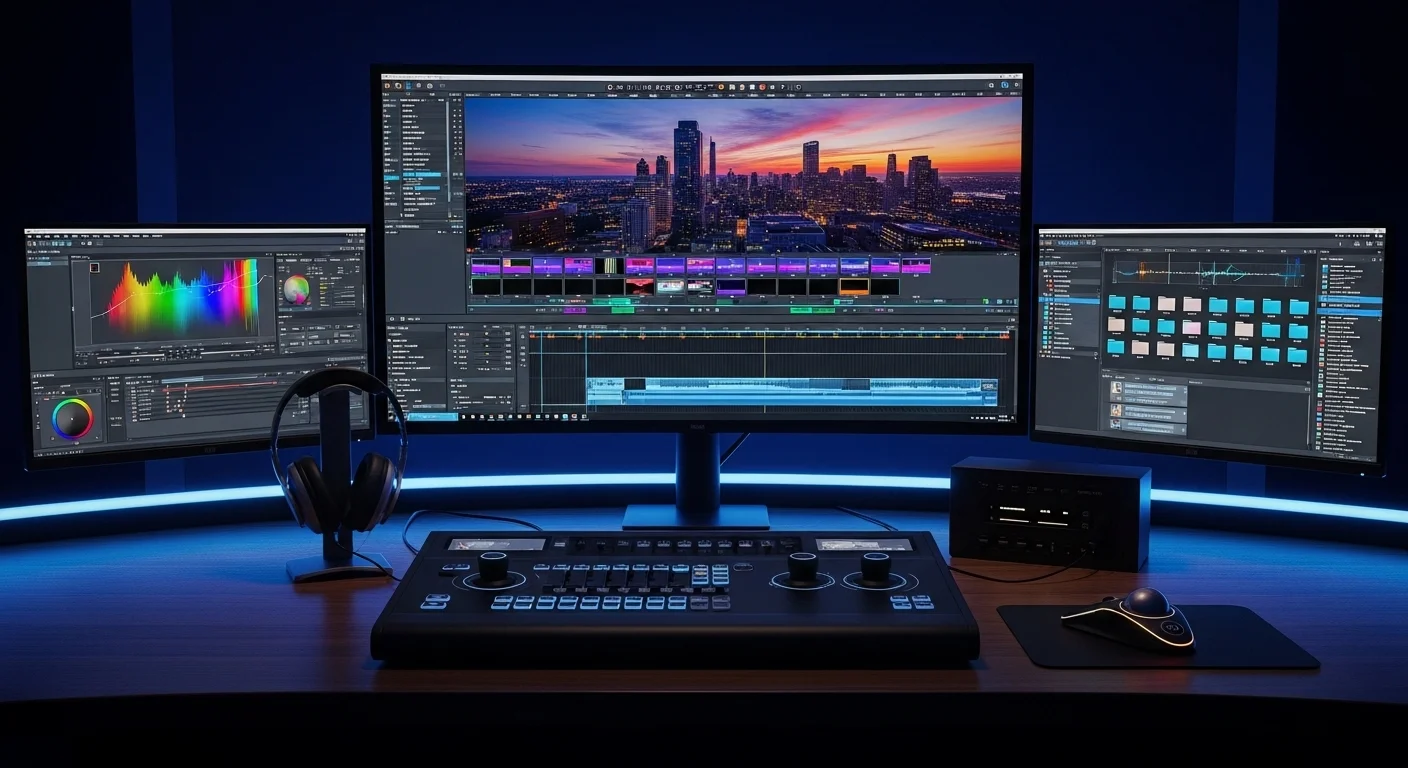
I have spent more than half of a decade in the video production, podcast production, and online content, and there is nothing that people can stumble over more than the selection of the incorrect tools at the incorrect time. In the past few years, media editing software has suddenly burst into a mass of choices, which sounds terrific until you are three hours through a free trial and find out that it can do everything except the single thing that you really needed.
So shall we cut through the clatter. It is a do-not-fool-youself overview of the media editing tools, what they are designed to do, who they are best applied to and where they fail.
The Landscape has changed radically.

Media editing was not so many years ago divided into distinct camps: The profession worked on Adobe or Avid, and the other part of the world made do with what was included in their laptop. To a large extent that gap has broken. Nowadays, a freelance YouTuber could get the same high-end timeline editor as a TV station. Tools that can be used by a musician recording at home rival those that major studios were using in the early 2000s.
The fact that democratization is really exciting is, however, accompanied by the fact that the learning curve conversation is now more complex. Having more power does not necessarily mean that it is easier to use.
Video Editing: The Place where a majority begin.
It is an industry standard because of a reason. Premiere is very compatible with After Effects, Audition and Photoshop, and this makes it to be incredibly powerful in multi-discipline projects. The multi-camera editing, color grading workstation and the flexibility of the timeline are all of the best.
The catch? It is sub-based and the cost accrues, particularly to independent creators who are not charging customers. It also has a performance hit on older machines.
DaVinci Resolve
This one turned the game when the core version was made free by black magic design. The color grading instruments of Resolve are rightfully global-best in category — colorists of feature films utilize the same program you can download currently at no cost. The Fairlight audio module is hard as well.
Where new users falter: the interface is separated into separate “pages” (Cut, Edit, Color, Fusion, Deliver), which is fairly logically structured but may seem disjointed at the start. The learning curve is steeper than, iMovie or even Premiere in the beginner level. That notwithstanding, most of the editors I know who have switched to Resolve never come back once they have made the switch.
Final Cut Pro
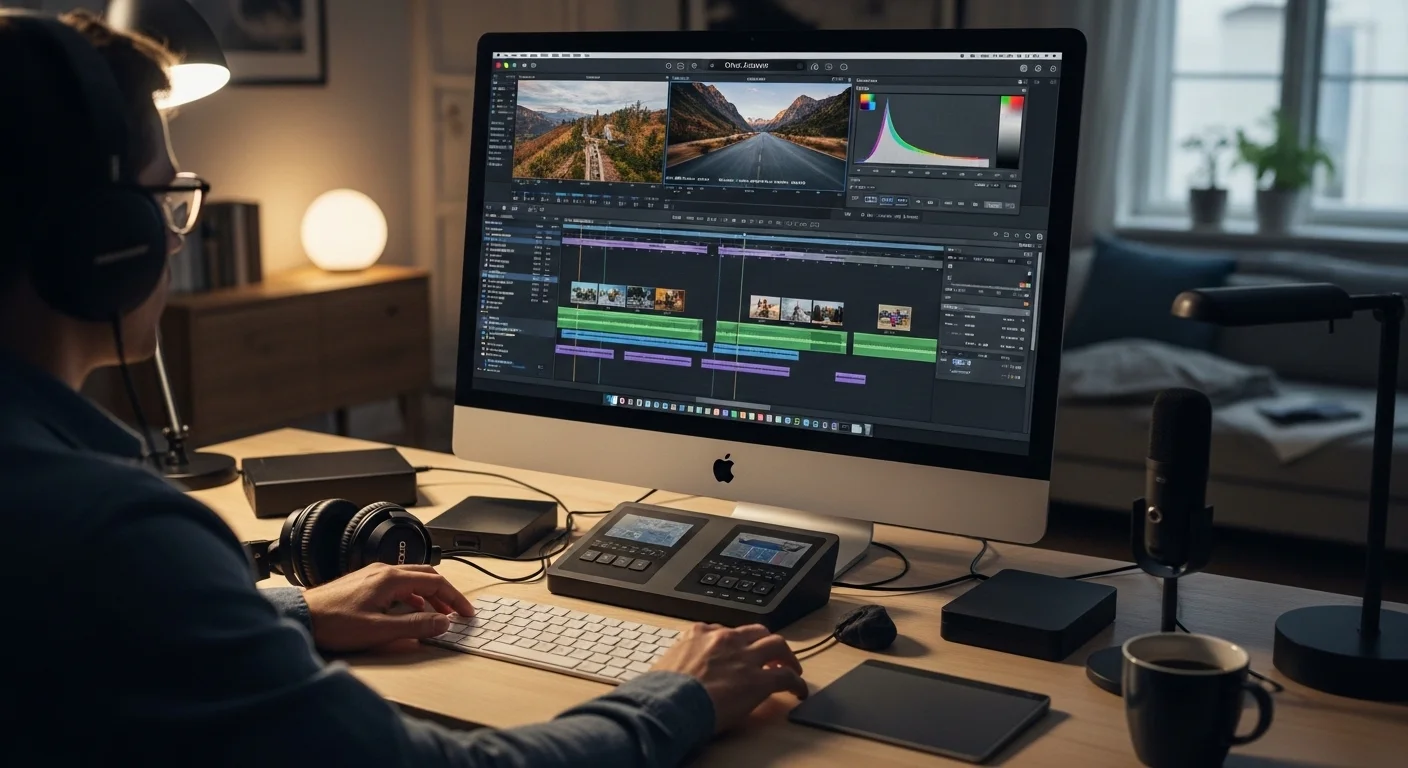
Final Cut is an excellent option to Mac users. Magnetic timeline requires a bit of acclimatization when moving over a more traditional track based editor, but once you get used to it rough cut work is much faster than on the track. Apple continues to enhance it in a significant way, and the one-time-buy model is a refreshing change to Adobe subscription.
The most apparent constraint is platform lock-in. When it comes to working with a Windows-based team or even to simply delegate a project to a post-production house on Premiere, the compatibility will friction.
Audio Editing: It is something that is underestimated.
Free, open-source, cross platform — Audacity has been the respite of podcasters and simple audio work over the years. It manages noise reduction, multi track editing as well as format conversion efficiently. It is not a glamorous one and the interface looks like it has been created in 2003 (because, frankly speaking, it was), however, it functions.
Adobe Audition
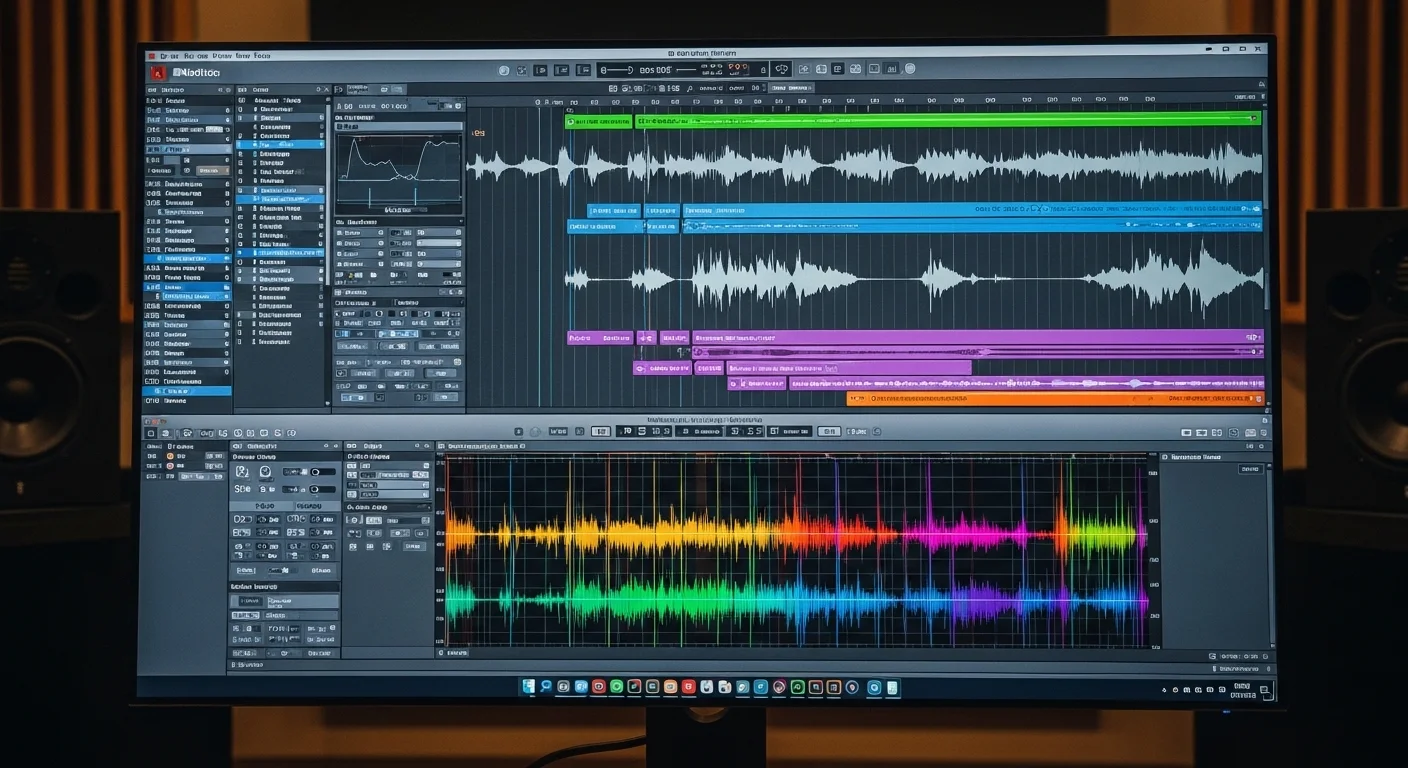
Audition (part of the Creative Cloud subscription) is usually slept on by premiere users. One of the most useful tools that I have ever used to clean up podcasts is the spectral frequency display used to remove audio artifacts. It is of great benefit especially in dialogue editing.
Logic Pro
Logic Pro has been the best choice among the reasons why it is a music production choice in Mac. The stock plugins in their own right, especially the vintage EQ and compressor models are in fact, truly professional. The investment of learning is evident and the reward may be high to anyone with a serious interest in creating music.
Photo and Graphic Editing.
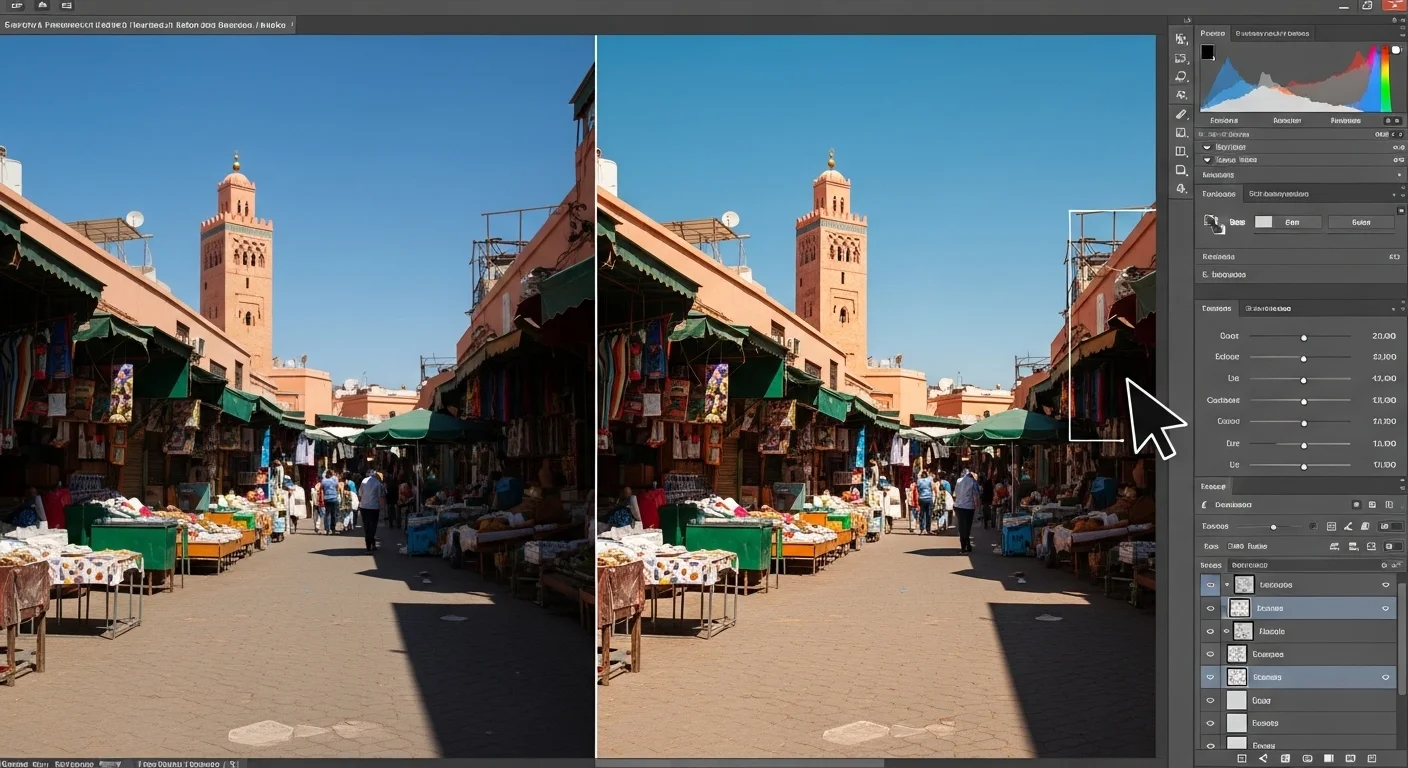
Photoshop has stood as a standard of advanced manipulation of images. Lightroom, in its turn, has become a necessity to photographers working with big catalogs and to those who need to perform effective color grading among shoots. They are used to achieve various functions and are most effective together.
Canva
Another category altogether, but worthy considering since it has become pervasive in the content of social media, thumbnails and rapid graphics. Canva does not compete with Photoshop in accuracy of the work, but as a marketing tool and as a content creation tool, which requires a fast and attractive tool, it is really impressive.
Nonjudging on Your Real Needs.

The greatest flaw I can observe is that people select tools according to their popularity instead of selecting the ones that are appropriate to their workflow. The same equipment is not needed by a travel vlogger who shoots in 4K and edits on a MacBook Pro compared to someone making corporate training videos or a musician recording a complete album.
When you start on something, the first question to ask yourself is What is my major output format? What is my hardware set up? Do I work alone or do I work in collaboration? Do I require the color grading or is simple correction sufficient?
Budget is also a consideration but not free necessarily equals better. In some instances the losses incurred in struggling with an unknown or constrained tool are greater than the software subscription would have been.
A Word on Learning
All good editors, I know, will say that the greatest aid in editing is the one one knows. The temptation is to make the latest software, but the knowledge in one program is more than cursory knowledge of five. Take the time to go through tutorials and work on actual projects and commit to a project until you reach its limits before going to another.
FAQs
Which media editing tool is best when starting out?
Video Starting points with no initial cost include DaVinci Resolve (free version) or iMovie, and audio Starting points include Audacity.
Is DaVinci Resolve free?
Yes, the core version is fully free and has professional grade tools. The Studio version is a single fee version with advanced features.
Will Premiere Pro work without Creative Cloud?
No, Premiere Pro is only subscribed via Adobe Creative Cloud.
What’s the difference between Lightroom and Photoshop?
Lightroom is specialized in catalog management and batch editing photos; Photoshop is used to edit photos with detail and deal with photos in layers.
What is the most suitable audio tool to edit podcasts?
Audacity to do it on a cheap setup; Adobe Audition to do a higher detail cleanup and noise removal.

Post Comment