Podcast Media Production: What It Actually Takes to Build a Show Worth Listening To
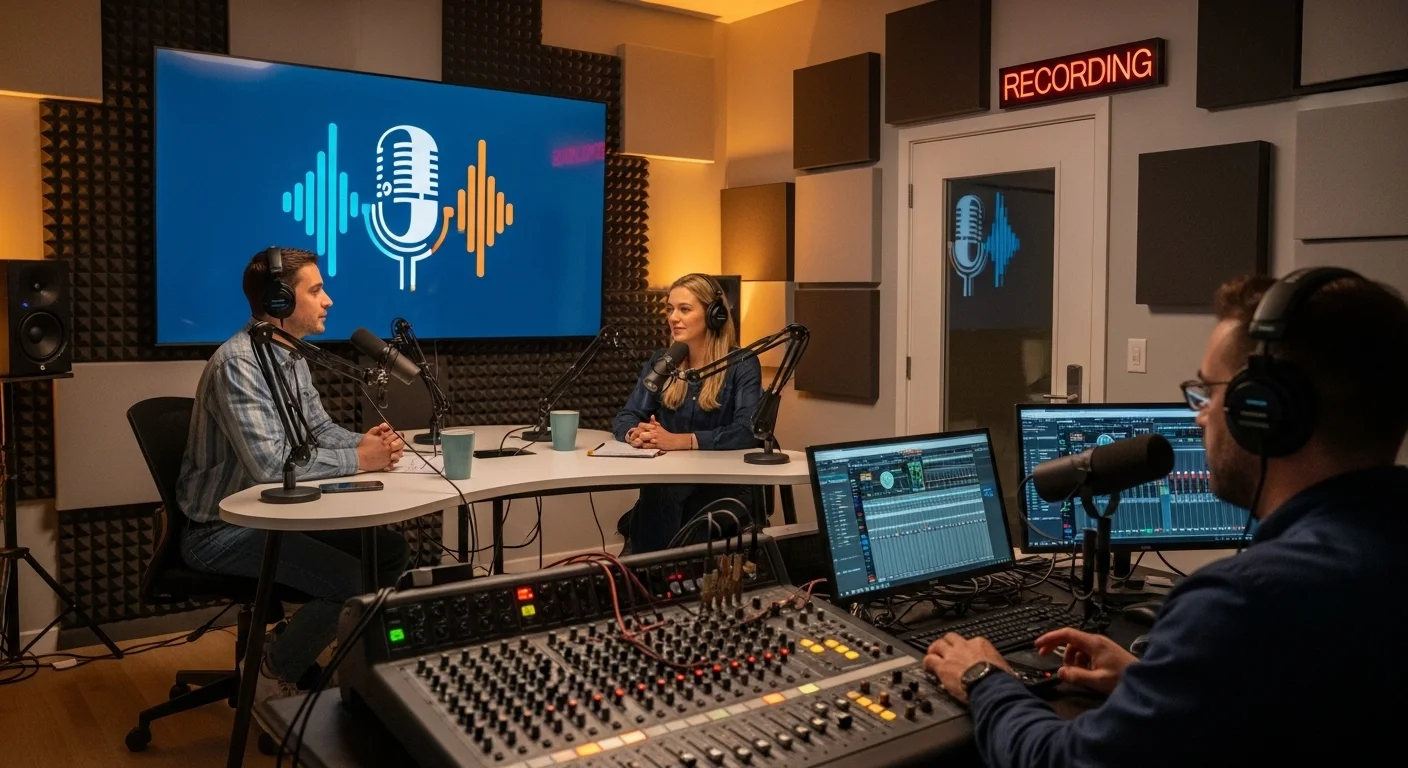
I have recorded in enough sort of home studios, making a studio out of closets with moving blankets and foam-lined bedrooms duct-taped to the wall, to understand that podcasting is more of a thing that seems easier on the outside than it is on the inside. Hit record can be hit by anybody. Not all of us are able to create a show in which we are able to return every week.
The podcast industry has been booming in the past 10 years. The number of active podcasts in the world is now far in excess of five million, encompassing true crime to specific B2B software topics. However, the most important thing that the newcomers are not aware of is that most shows are not renewed after the seventh episode. It is not due to the fact that people do not have anything to say. This is because they do not have the right idea of what podcast media production entails.
The Foundation: Development of Formats and Conceptual Development.
Mean no dishearten you. It is the most significant of creative exercises in the entire procedure. The beginning of podcast production is the clarity of the concepts. Format – solo commentary, co-hosted discussion, interview-driven, narrative storytelling? They all require various skills, various equipment configurations and various editing processes.
The most popular types of interview programs are interview shows as they are considered to be approachable. Ask someone to come over, talk, that is it. And it is so unless it is so easy. You must do your homework on your guests, you must find questions that are not superficial, you must coordinate the sound in two or more places, and you must cut out the awkward silences, and the ums, and the moments when a guest goes dead and is only able to think after a long pause.
Narrative podcasts the type that narrates a story over a series of episodes needs more of radio journalism. You are scripting, recording sound around, having interviews that lead to a larger narrative, and organizing episodes into chapters. It is much more time-consuming and per episode, but the listeners are more likely to be engaged.
Equipment: Use Smart, Not Bigger.
This is where many first-time producers make their biggest mistakes, on one side they will buy the cheapest USB microphone they can do so because they think that their audio will sound like it was being recorded in a tin can or on the other side they will purchase a studio-quality setup because they have not yet proven to them that they can actually keep to their publishing schedule.
Most independent podcast producers are somewhere in the middle with their sweet spot. A good dynamic microphone such as the Shure SM7B or the Audio-Technica ATR2100x, a good audio interface, a pair of closed-back headphones and a little acoustic treatment in your recording room will get you 90 per cent of the way there.
The importance of acoustic treatment is greater than expected by people. There are hard surfaces, bare walls, big windows, which reflect and distort your audio even an expensive microphone. You do not require foam panels that are professional. Carpets, shelves of books and a few thick curtains will obviously mute the sound in a manner that will make recording significantly cleaner.
Taping and The Art of To Record and To Capture Something Good.
The recording phase is just half the battle as regards technical set up. The other half is performance – and this is where many podcasters fail even without even knowing it.
It is so awkward to listen to ourselves. The majority of the population is disgusted by it. Nevertheless, it is the quickest method of discovering habits that alter your credibility and likeability on the air. When you speak too close to the microphone, end your sentences with a run-on, use too many filler words, talk faster than the other person, etc., all these things can be corrected, but only when you can be honest with yourself about what you are doing.
As far as interview formats are concerned, the art of active listening is all. The most interesting podcast discussions occur when the host shows enthusiasm and interest in the discussion and will follow some unusual leads instead of simply reading off a list of questions. The difference can be heard by the listeners. A natural dialogue possesses a beat which a scripted Q&A just lacks.
Post-Production: This is the Place where the Show is Made.
The podcast media production comes into reality in editing. Post-production can be completed in one hour or even eight hours per episode, depending on your format, and the recording conditions.
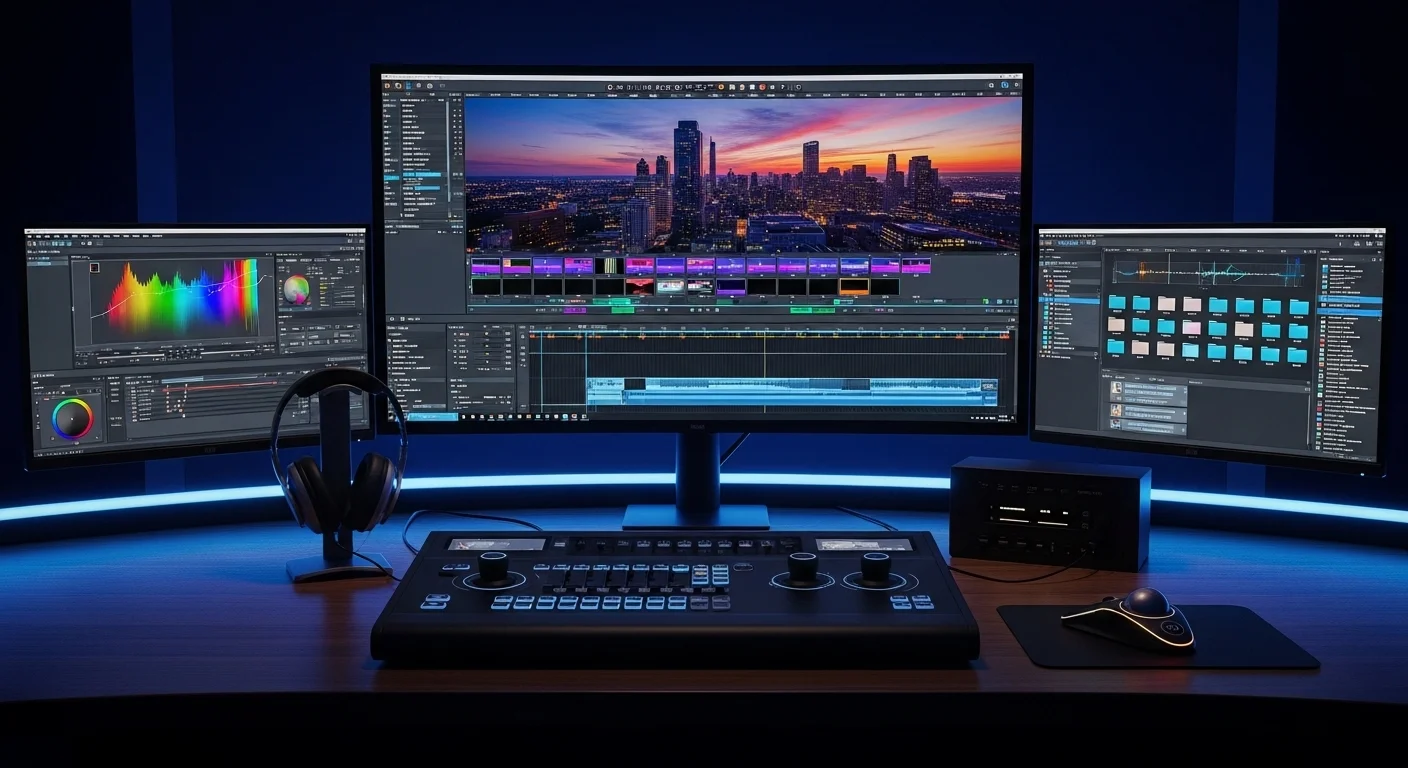
Majority of editors operate in digital audio workstations such as Adobe Audition, Logic Pro, Reaper or Descript which has gained popularity due to its ability to allow editing audio by editing a text transcript, which truly makes the process faster. The basic editing operations comprise of noise reduction, balancing the audio of various tracks, eliminating dead air and errors, and adding intro/outro music.
Underestimate not the importance of a clean mix. Consistency in volume is also a factor- your listener does not have to turn the stereo in his car to listen to a low-volume guest and then be shocked by your voice. By processing your final mix with a utility such as Auphonic or matching the loudness of your levels to those of a typical podcast (around -16 LUFS in stereo) you achieve a professional, finished sound.
Distribution and Growth
To publish your podcast, you have to select a hosting service, such as Buzzsprout, Podbean, Anchor (since it is now Spotify for Podcasters), Transistor, and Libsyn (but not limited to them). Your host will create an RSS feed that automatically distributes your show to Apple Podcasts, Spotify, Google Podcasts, and all other places.
The largest growth factor is consistency. No marketing tricks, no mentioning of your name as a guest, no appearances at a regular time, no quality content. Customers develop patterns of watching a show which is dependable.
FAQs
What is the price of starting a podcast?
It will take you as little as $100200 to get going with a good USB microphone and a free host. A more professional installation costs 500-1,500.
What is the length of a podcast episode?
Whilst it must be so. The majority of successful shows last 20 to 60 minutes, and suit the content and viewers.
Do I need a script?
Not necessarily. Bullet-point summaries are effective when doing a talk show. Full scripts are advantageous to narrative forms.
What can I do to expand my podcast?
The most trustworthy growth strategies are consistency, quality audio, authentic interaction with the audience and cross-promotion by other shows within your niche.
Is it difficult to learn how to edit a podcast?
The simplest editing can be acquired in a couple of weeks. Most independent shows do not need advanced mixing, but require more time than simple mixing.

Post Comment