Social Media Management Tools: A Complete Guide From Someone Who’s Tested Dozens
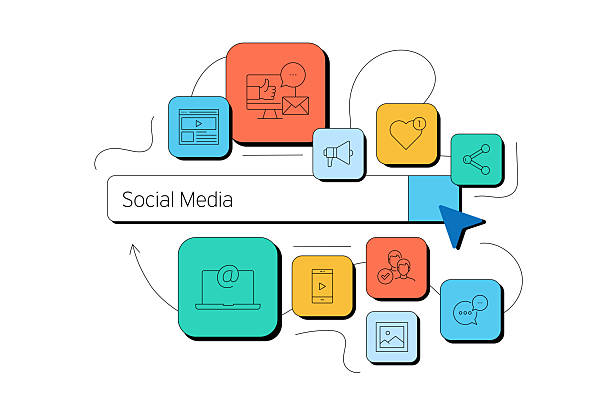
Social Media Management Tools, I can recall the messiness of my initial marketing role in 2016. I had my spreadsheets all over the place, browser tabs like rabbits and the constant fear that I had forgotten to post something vital. It was until I found out that there is a more intelligent way of using social media that does not make you want to lose your sanity.
Having been in the account management business in nearly eight years serving local bakeries to mid-size tech firms, I have been able to formulate some rather firm opinions about available social media management tools. Allow me the pleasure of telling you what I have tried, experimented, and far too often lost many a late night.
The reason these tools are of more and more importance.
The truth of the matter is that it is no longer optional to maintain a steady and consistent social media presence across various platforms. It’s expected. The standard business has four to six social platforms and each has an optimum time of posting, type of content and customer habits.
Attempting to do all this manually? That’s a recipe for burnout. I had to experience it myself when I was copy-pasting the same content in different platforms and setting up phone alarm to post at certain times and still somehow missing engagement windows.
The tools of social media management are basically a command center. They unify everything in a single roof, scheduling, analytics, monitoring and collaboration between teams. The time saved may be substantial alone. It would take me thirty-five minutes what would have taken me three hours a day before.
The Major Players Worth Your Paying Attention to.

Hootsuite is not that new, as it existed since 2008, which is virtually a prehistoric state of social media. I have utilized it widely, and it contains the ease of maturity. The dashboard and the scheduling calendar are very smooth in managing multiple accounts and provide you with a birds-eye view of your content pipeline.
The best thing about it is the social listening option. You do not have to switch sites to follow brand mentions, competitor activity, and industry keywords. The learning curve is not that bad either most individuals will be comfortable in a week.
The downside? Over the years, there has been a tremendous increase in pricing. In the case of small business or an individual creator, it may seem as though you are paying to unlock the features you will never use.
Buffer: Simplicity Done Right.
Buffer is the Swiss Army knife in comparison with Hootsuite, whereas the latter is a really excellent chef knife. It has fewer items, however does them brilliantly. The interface is also well minimalized, nearly relaxing up to the more complicated options.
Buffer was recommended to me by a friend who operates a small pottery studio last year. She possessed no prior experience in marketing and was already posting with success in an hour after registering. That accessibility matters.
Buffer is especially useful in cases of individuals and small teams that put much emphasis on content scheduling and rudimentary analytics. Their free option is also actually usable, unlike with other platforms.
Sprout social: the business option.

Sprout social was necessary when I transferred to an agency that dealt with bigger clients. The analytic functionality is remarkable- you can cut data in a manner that not only can be used in formulating strategy, but also which can be used to produce nice reports.
The unified inbox facility transformed my approach to customer service. The ability to respond to comments, messages, and mentions on both platforms in one place decreased the response time significantly. Customers observed and their clients liked quicker responses.
Caution on the matter: The prices of the Sprout social are indicative of what it is targeting which is the enterprise segment. You are paying high prices so make you will really utilize those advanced features.
Later: Visual-First Approach
Later is still my preferred choice in the case of Instagram-intensive strategies. The visual content calendar allows posting and dragging as you can preview your feed and see just how it will appear before anything is published. This is important than some individuals think-feed aesthetics still makes a difference in follower choices.
They have a feature, Linkin.bio, that addresses the single-link issue in a graceful way and makes your Instagram a clickable landing page. I have observed that small e-commerce brands were able to push significant traffic with only this feature.
Selecting What Really Suits You.
Having discussed the social strategy with dozens of businesses, I have observed that people tend to purchase according to the reviews, but not based on the needs. That’s backwards.
Begin by answering some straightforward questions. What is the number of platforms you are currently dealing with? What’s your team size? Approval workflows or is it you only making decisions? How much have you to spend on other marketing expenditures?
An entrepreneurial individual will not require the enterprise functionality of Sprout Social more than a Fortune 500 company would do well using only the free version of Buffer. Correlate the instrument with what you have now in reality, and not with what you aspire to have.
Final Thoughts
The management tools of social media will not turn a poor strategy to a good one. However, they can also clearly make the implementation of sound strategy more effective, predictable, and quantifiable. The appropriate tool is closer to an addition of the way you already conceptualize social media, only with superpowers.
Use the benefits of free trials. Try various alternatives using your real processes. Note the interface experience as it frustrates you with time. The returns on the search of your fit are returns in long-term consistency.
Frequently Asked Questions
Which is the most appropriate social media management tool?
Buffer also has the best easy-to-learn curve, with the necessary functionality in scheduling and analytics. Their free plan is functional to start with.
Is it possible to control the entire social platforms under one tool?
The majority of the significant tools are compatible with Facebook, Instagram, Twitter/X, Linked In, and Pinterest. TikTok integration can be either good or bad, do it before you commit.
Are free social media tools worth the approach?
Definitely, particularly during the beginning. Buffer, Later, and Hootsuite all have a working free plan that has a restriction on the number of posts or accounts to be connected.
What amount of these tools shall I allocate?
You are likely to spend between 15- 100 a month on small business requirements. Enterprise solutions operate at a tune of several hundreds of dollars per month.
Are scheduler tools damaging to consideration or coverage?
Not. Scheduled content is not punished on platforms. Engagement is based on the quality and the time of content and not the mode of posting.
Which is the frequency of posting on social media?
Frequency is not as important as quality. A consistent post of 3-5 platforms per week is considered to give good results to most businesses.


Post Comment