Film Production Equipment: A Complete Guide from Someone Who’s Been on Set
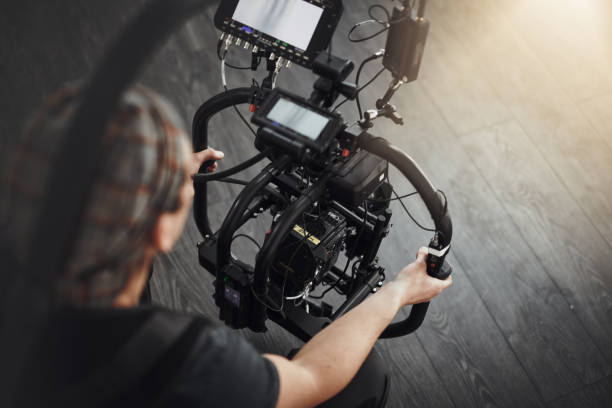
Film production equipment, It is magical to enter a film set the first time. I do not forget my first experience as a production assistant that took place in 2015 when I was entirely amazed by the amount of equipment that was scattered over the location. Snaking cables in all directions, huge lights on tents, cameras priced higher than my vehicle, it was no less than frightening.
After years of being in different positions on the crew, and now working as a consultant to independent productions, I have grown to understand the extent to which equipment has contributed to the existence of the film industry. You are either a film student, aspiring filmmaker or you just need to know what it takes to make moving images.
Cameras: The Heart of Every Production.
We may begin with that which most people consider at first, which is the camera. The territory has changed significantly within the last ten years. At the time of my entry, the RED Epic used to serve as a solution to mid-budget productions. Options have increased significantly now.
Cinema Cameras
There are several professional productions to which the ARRI Alexa series has become the gold standard. And there is a reason why so many Oscar-winning films were shot on Alexas the color science is truly impressive. I have used the Alexa Mini LF on a couple of commercials, and the image is self-explanatory.
To independent filmmakers, Blackmagic Pocket Cinema Camera series has become a revolution. The 4K version, which costs roughly $1,300, offers raw recording functions which ten years ago were considered impossible to provide at that price.
The Venice and the later FX have found a large market, especially in documentary and television productions. The dual native ISO most cameras have currently creates a level of versatility in Sony cameras that can be used in uncertain times of light.
Rocket science: Lenses Matter More Than You Think.
This is one of the things that many newcomers forget to consider: the type of lens that you use can have a more significant influence on the eventual shot than the actual camera body. A camera with an inexpensive lens of $50,000 will appear to be worse than a camera with quality glass of $3,000.
There has been a renaissance of vintage lenses in the recent times. I have a pair of Helios 44-2 which I bought with less than 100 dollars apiece. Their swirly bokeh which they produce gives it character which cannot be replicated by modern clinical lenses. This is why a lot of cinematographers go after old Cooke, Zeiss, and Canon FD glass because of the way it renders.
Lighting Equipment: Lighting Painting.
Cinematography simply translates to writing with light and what you use to light up your production will either sell or break your production. This lesson came to me very painfully on an early short film where we were attempting to shoot all with natural light. The mixed outcomes helped me to learn that I should not underrate the appropriate lighting.
LED Revolution
This industry has mostly shifted to LED fixtures and they have a reason to do so. They are cool, use less energy, and most of them have full color spectrum control via apps or onboard controls.
Aputure is now very popular with independent filmmakers. Their 600D-series extensively over punches its price. I have used them as a primary lights in interview systems and they perform well in comparison to a three times more expensive fixtures.
In the case of bigger production systems, ARRI SkyPanels and Creamsource lights prevail. The fact that one can set precise matching color temperatures and can reproduce already existing practicals on site saves colossal time during production.
The Grip Equipment
Lighting should be supported and adjusted. C-stands, sandbags, flags, silks and reflectors are not glamorous but they are absolutely necessary. A grip truck properly rigged has hundreds of single items that are used to fix a set problem every day.
Audio Equipment: The Forgotten Part.
This is a bitter experience that must be accepted: poor audio will not be tolerated by the audience as long as mediocre images are shown. I have witnessed bright movies spoiled by inoperable sound taped on the set.
Good productions put money in good sound equipment. The standard in the industry would be a Sound Devices mixer/recorder with Sennheiser or Schoeps microphones. Lectrosonics wireless systems or newer models such as Deity give actors the freedom of movement without trailing cables.
It is always a good practice to have extra audio tracks. Always. This I cannot emphasize on after one heart breaking incident when just one failure of the microphone plunged me into doing a whole day of work again.
Tripods and Fluid Heads
Sachtler, O’Connor, and Manfrotto control the business tripod market. A decent fluid head in smooth pan and tilt mode will cost between 1,000 and 15,000 dollars depending on the payload capacity and the feature set.
Gimbals and Steadicams
Stabilized movement was democratized by motorized gimbals such as the DJI Ronin series. Shots that would have cost a Steadicam operator and a costly rig at the price of roughly $3,500 can now be obtained.
With that said, conventional Steadicam work will not be irrelevant. The operator control and the organic movement just do not feel like gimbal footage.
Dollies and Cranes
In the case of controlled tracking shots, there has been nothing as good as a respectable dolly on smooth track. Dana Dolly systems are applied to small productions and use of Fisher dollies applies to bigger shoots.
Putting It All Together
The creation of a production package involves striking a balance between the budget and the creative aspiration. My advice for newcomers? Rent before you buy. Test various equipment to know the one that really fits your workflow.
This is because good audio gear and lighting should be purchased first than spending much on a costly camera. The basics are important and not the new technology.
Frequently Asked Questions
What is the most Hollywood filming camera?
ARRI Alexa cameras are the most popular cameras in high-budget productions, yet Sony Venice and RED systems are also popular.
What is the cost of renting professional film equipment?
The simplest camera and lens bundle costs 500-2000 per day. These complete production packages which include lighting and grip may cost more than 10000 dollars per day.
Is it possible to have a professional-looking film with cheap equipment?
Absolutely. Some good light cameras such as the Blackmagic Pocket and the Sony FX30 can be used to deliver broadcast results.
More important than the camera, or the lenses?
Lenses are generally more important than camera bodies, and more cost-effective to use.
Should I have professional sound systems?
Yes. Bad sound destroys otherwise excellent productions. Allocate money towards proper sound recording.
What is the way I learn how to use film production equipment?
Practical experience is the most important. The volunteer work on sets, rent equipment to work on personal projects and train.

Post Comment