Digital Advertising Trends: What’s Actually Working in 2024 and Beyond

Digital Advertising Trends, I have spent more than fifteen years observing the process of the development of digital advertising which started with banner advertisements and has transformed into a multi-channel monster. And honestly? This has been like no other change I have ever seen in the last two years.
I want to take you through what is really being experienced in the trenches, not the buzzword-infused projections you will find in most marketing reports but the actual changes that are being experienced to transform how brands are reaching audiences.
The Death of Third-Party Cookies (It’s Finally Happening).
The apocalypse of cookies has been on the news since years. Google continued to extend their depreciation, and a range of marketers that I have known became complacent. Big mistake.
According to 2024, the transition is already being taken. Chrome is slowly ending third-party cookies on a percentage of users and it is being rolled out. What is the practical meaning of this? Brands which have not invested on first-party data strategies are scrambling.
Recently, I collaborated with a mid-sized e-commerce company where almost all the retargeting was done using third-party data. Their customer acquisition costs increased significantly by almost forty percent in half a year. In the meantime, a rival, who had taken two years to develop email lists, loyalty programs, and authenticated user experiences, hardly felt the heat.
The moral of the story is not novel, but it is time-sensitive: control your audience relations. Email subscribers, application users, logged-in customers- these are your insurance policy towards change of platforms.
Artificial Intelligence Advertising has stopped being optional.
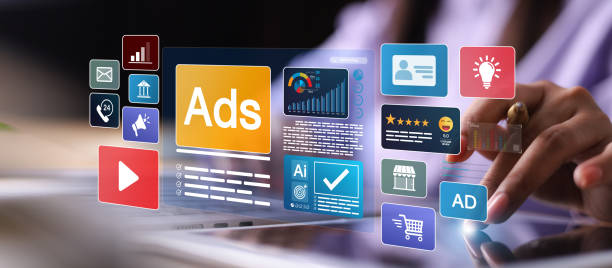
All big advertisement platforms have incorporated machine learning in their service. The Performance Max of Google, the Advantage+ campaigns of Meta, the Smart Performance Campaigns of Tik Tok all have one thing in common: the algorithms do the work of targeting, bidding and optimization of creativity.
Those brands with the fullest successes are those that supply these systems with a robust creative mix and definitive indicators of conversion. I have witnessed campaigns that have fifteen imaginative iterations beat the same budgets by half or forty percent with only three or four assets.
But there’s a trade-off. You are abandoning the ability to have a granular control and visibility. It gets difficult to know why something worked. This necessitates a change of mindset both in the agencies and in-house teams; that is, from tactical to strategic creative development.
Connected TV and Streaming Ads Have Come of Age.
You can recall that it was something new to advertise on streaming services? Those days are gone.
Connected TV (CTV) advertisement spending has gone off, and with a purpose. The targeting functions have become comparable to the digital display, the completion rates have become many times greater than the traditional video formats and the measurement infrastructure has become much better.
One of my friends who heads the marketing in a local healthcare system experimented with CTV campaigns a year ago. They were paying about a third of what they paid to YouTube pre-roll and they were seeing a quantifiable increase in branded search queries in their target geographical locations.
Not only Fashion Brands Can use Social Commerce.
The TikTok Shop, Instagram Checkout, and the shopping features of Pinterest are their ways of ensuring that the transactions are conducted without the users leaving the site at all. And this is becoming more comfy with consumers.
What was unexpected was the presence of other categories to do well in other than fashion and beauty. I have seen home items brands, specialty food firms and even B2B software firms make real dollars via social commerce.
Native content appears to be the key. The products in the real-life-like videos, unboxing materials, or video demonstrations by the creators will always perform better than the well-polished product shots.
Impressions are being supplanted with attention metrics.
Measuring attention- monitoring the viewability, in-focus and actual consumption of ads- is at last becoming mainstream. Such sites as Adelaide and Lumen have opened the door of attention metrics and giant advertisers are using them in their media planning.
In one of my recent campaign audits last quarter, I discovered that the programmatic display placements of a client with the largest amounts of impressions received some of the lowest attention scores. They were literally paying advertisements that were loaded at the bottom of the pages that no one scrolls to. The overall campaign performance of such budget redirects on attention data was 18 better than their original budget.
Massive Budgets are being captured in Retail Media Networks.
Amazon Advertising was not everything. Walmart Connect, Target Roundel, Kroger Precision Marketing, Instacart Ads- retailers have discovered that their first-party shopping data is very valuable.
Retail media has become a necessary evil especially in consumer packaged goods brands. It is also difficult to be able to target on the basis of real purchase behavior and to do the closed-loop sales attribution which cannot be compared to the traditional digital advertising.
The downside? These networks are costly and you are literally spending money to have your advertisements placed in areas where the consumers may have discovered your product. Smart brands strike a balance between the retail media spending and building awareness on the upper funnel.
The First Advertising Privacies Need Innovative Solutions.
The privacy consideration is driving in every advertisement choice between the App Tracking Transparency by Apple, GDPR, US state-level privacy laws, and increased consumer awareness.
Contextual advertising has enjoyed a true revival. Instead of delivering messages to people according to their behavioral profile, advertisers are placing messages next to pertinent content. It is not as accurate but is more sustainable.
I also have observed more investment in marketing mix modeling and incrementality testing, which are older statistical techniques that aid in the measurement of effectiveness of advertising without using user-level tracking.
Final Thoughts
Adaptability is rewarded by digital advertising in 2024. It is not always the brands that have the largest budgets but those that can afford to experiment, invest in first-party relationships and accept the complexity of a fragmented landscape that wins.
The principles are the same: know your audience, make strong messages and measure what matters. The implementation is however in need of continuous evolution.
Frequently Asked Questions
How will the largest digital trend in advertising be in 2024?
The two trends that are affecting the strategies in this year the most are the shift towards AI-driven campaign management and the devaluation of third-party cookies.
Will the third-party cookies be actually eliminated?
Yes. Google Chrome is slowly phasing them out, and should be completely depleted at the end of 2024 or early 2025.
What is the effectiveness of Connected TV advertising?
Brand awareness and consideration are very effective, and the completion rates are high, and better targeting opportunities are provided in comparison with the traditional television.
What are retail media networks?
Advertisements run by retailers such as Amazon Walmart, and Target that use first-party shopping data to targeted advertising.
Is there a resurgence of contextual advertising?
Absolutely. The privacy limitations have revived the urge to put advertisements in relation to the contents and not to track the users.
What should brands do to get ready to a cookieless future?
Pay attention to the development of the first-party data by email addresses, loyalty programs, and authenticated experiences.




Post Comment