Broadcast Journalism: The Art and Science of Telling Stories Through Sound and Screen
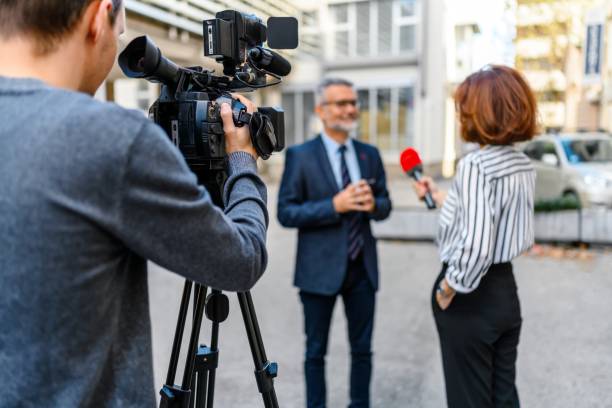
Broadcast Journalism, I can recall how I had entered a television newsroom in the year 2008. It was drunkening stuff–the shouts of the producers all over the floor, the reporters all trying to beat deadlines, and that buzzing of the monitors with live feeds all over the world. That was one of the moments when clarity came to me: it is not an occupation, but rather a calling that requires you as a whole to give your all to broadcast journalism.
I have been working in different capacities in radio and television news over the past fifteen years and the change that has occurred in this industry has been in a manner that no body ever imagined. But the essence of our work will always be the same: to provide proper, persuasive stories to our viewers who need us.
So What Is Broadcast Journalism?

Broadcast journalism is defined at the very base as the news coverage and storytelling via electronic media; mostly television and radio, but definition of the concept has significantly extended to digital streaming and podcasts. Broadcast journalism incorporates audio, video, graphics and live news presentations to create a comprehensive news experience as opposed to print journalism which only uses written words and stagnant images to generate a news presentation.
Immediacy is the distinguishing feature of broadcast journalism. Broadcast journalists are supposed to be live within minutes when one of the big stories breaks and synthesize complicated information when the cameras are rolling and the millions are watching.
The Evolution that No one Saw.
By the time I entered this business, the iPhone was a new product. No one at our newsroom could have imagined that the smartphone technology and social media will be the two factors that would completely change the news consumption behavior. Former evening news programs which used to pull 50 million viewers are now competing with an ever-increasing number of digital sources.
This revolution has not killed broadcast journalism, it has driven it to change. The broadcast journalists of today need to be multi-platform reporters. A television reporter in the city hall may submit a television package, record a podcast clip, update social media (and write a web story) all before lunch.
Cable news stations such as CNN, Fox News, and MSNBC have moved towards an opinion based program during the prime time hours and the local television stations continue to be the key source of local news to millions of Americans.
Skills That Actually Matter
These are a few things that journalism schools do not necessarily teach their students to be proficient in, but rather have strong people skills and are capable of drawing out stories out of situational chaos and making them meaningful.
Interviewing, Development of Sources.
The most effective broadcast journalists I have worked with have a similar trait they are simply interested in other people. It takes emotional intelligence, which cannot be acquired in a classroom, to get a grieving mother to talk about her loss of her son, to persuade an unwilling whistleblower to get on camera, or to establish a connection with community leaders who have been burnt by the media.
Writing for the Ear
Broadcast writing is different in its basis to print. Sentences must be spoken as they are natural. Complex concepts should be made simple instead of being dumbed down. I have read thousands of scripts because of the years and rhythm and conversational tone are the two elements that make the difference between a good and a brilliant broadcast writing.
Technical Competence
Contemporary broadcast journalists are expected to record their material, cut packages and use minimal studio gear. Gone are the times when reporters just turned up there, read out scripts and left technicians to do the rest. Technology and budget reduction have resulted in the one-man-band model in most stations especially in smaller markets.
The Ethical Tightrope
There is strong ethical attention and criticism on broadcast journalism and well deserved. Visual storytelling is a huge responsibility of shaping the perception of the people.
I have had ethical dilemmas that had me lying at night. Is it okay to broadcast the footage of a suspect that may influence the potential jurors? How do we report a mass shooting that does not give copycats the idea? How far can one go in trying to get a story before it becomes harassment?
Code of ethics in the Society of Professional Journalists is a guideline, and the reality of situations is rarely accommodated into theoretical models. These decisions are all influenced by editorial judgment, institutional culture and personal integrity.
Breaking Into the Business

The majority of the broadcast journalists that achieve success enter small markets such as Yakima, Washington or Joplin, Missouri, where they can err and acquire their trade and also accrue tape. The compensation is low, the work hours inhuman and the living conditions are usually difficult. However, these experiences create professional competence in a manner that cannot be created in prestigious internships.
It is very important to create a powerful demo reel. Before news directors looking into your applications actually watch any of your work, they make judgments and watch only a few seconds. Your best reporting, your best writing should be presented in every story.
Issues in the Industry.
It is high time to be truthful about the challenges. The large layoffs in the local news stations have been due to the loss of advertisement revenue to digital platforms. Other conglomerates such as Sinclair Broadcast Group have merged ownership which has at times required content that are problematic of editorial independence.
The media has lost trust and partisan viewers have moved towards those that are reinforcing the beliefs. Regaining trust means regular showcasing of justice, precision, and sincerity in the community.
Looking Forward
Nevertheless, I am optimistic that I will make it with caution. There is still a place of quality journalism- perhaps more now than ever in a world of information overload. Readers and audiences desire credible voices that are able to provide meaning of complicated matters that are impacting their lives.
The broadcast journalists who succeed will adopt the change in technology without compromising their unrelenting adherence to the truth-telling. They will discover new ways of telling stories and at the same time preserving the conventional ethical threshold. Above all, they will keep in mind that behind a statistic there is a human face, whose story should be told with all honesty and sympathy.
Frequently Asked Questions
What is the education level required in broadcast journalism?
Majority of the jobs demand a bachelors degree in journalism, communications and other related disciplines although in some instances skills and experience over-rule the college degree.
What is the amount that broadcast journalists make?
Salaries differ widely, small market reporters could have up to 30000-40000 a year, big market anchors could earn millions a year.
Is there a death of broadcast journalism?
No, but it’s transforming. The conventional audience has gone, but the search of good video journalism in several media is still increasing.
What is the common career?
The vast majority of journalists begin in small markets (markets with a designated market area 150+), then gradually make their way up to larger markets in terms of experience and reputation.
To what extent is appearance important in broadcast journalism?
On-camera actor jobs demand professional appearance, yet the contents and the power of narration are what matter the most as opposed to the physical beauty.
So what is the distinction between broadcast and digital journalism?
The boundaries have been overlapped greatly. Digital outlets are making video content, and broadcast journalists are generating digital content.




Post Comment